

Here's a question worth sitting with: does your team actually know HOW it's going to work together over the coming months, or is that based on assumptions and implicit habits?
Most teams assume. It's fast, it's easy and it works right up until it doesn't. A team charter can change that.
Every team has two versions of itself. The one that shows up in the meeting. And the one that talks in the corridor afterwards.
The gap between those two versions is where culture actually lives. And most leaders never close it: not because they don't want to, but because they never create the conditions for the conversation that would.
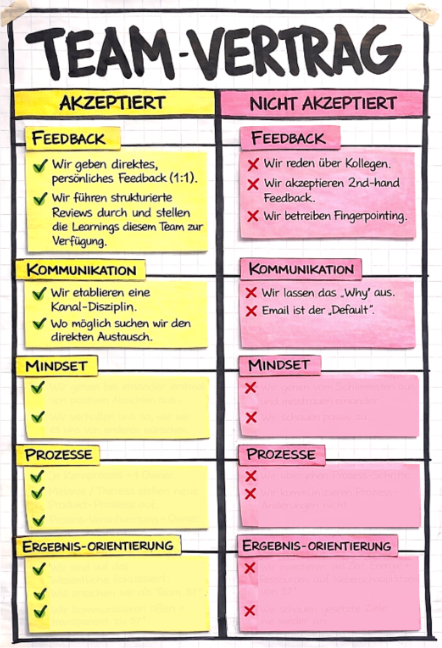
At WITHIN, the leadership and culture change consultancy, we were working with a leadership team in Germany. Half the room had been there for years: they carried the history, knew what had been tried before and had strong feelings about how things worked. The other half were newer, focused on where the business needed to go.
So instead of a team-building exercise, we asked them to write a Team Contract. We worked through it together. The whole group, in the room. Not the leader presenting a set of norms for everyone else to nod at. Everyone contributing, everyone negotiating, everyone owning what came out the other side.
The part that landed most strongly wasn't the commitments to better feedback, clearer communication and stronger accountability. It was the second column: the one that named what was no longer acceptable. Talking about someone's performance to a third party before talking to them directly. Leaving the why out of decisions. Assuming bad intent.
By the end of the day, the two halves of the room hadn't become one. That takes longer, and anyone who tells you otherwise is selling something. But they had what they didn't have at the start: a shared language, shared standards and a legitimate way to hold each other to them when things slip.
How to do this with your team
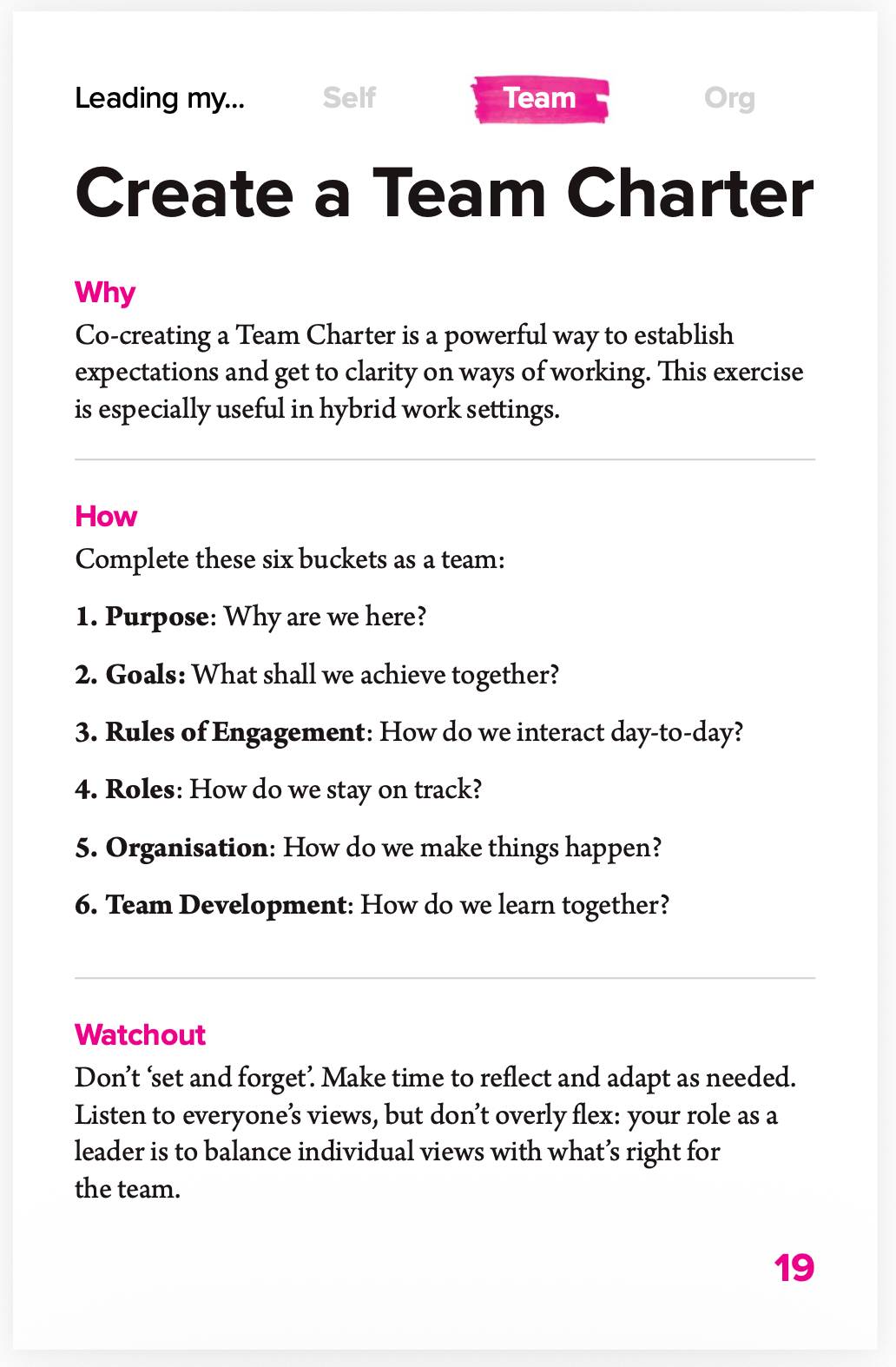
Card 19 of the WITHIN Leadership Toolkit is Create a Team Charter. Here's what actually makes it work.
Co-create, don't present. If the leader arrives with a draft, it becomes a document people sign off rather than something they own. Run it as a live conversation. Use the six buckets on the card as your structure: purpose, goals, rules of engagement, roles, organisation and team development. But let the room fill them. Your job is to facilitate, not to have the answers.
Return to it within three months. A charter nobody revisits becomes a source of cynicism faster than having no charter at all. Book the review before you leave the room. Ask two questions when you get there: where have we lived up to this, and where haven't we? The second question is the one that matters.
Download Card 19 and the full Leadership Toolkit:
